


The Future of Agriculture

Weed Elimination
with Laser Precision

No herbicides. No soil stress. No residues. High-power lasers eliminate weeds precisely at the cellular level – automated, around the clock, sustainably.

100 % Chemical-free
up to 99 % AI recognition accuracy
24/7 Autonomous operation
0 Herbicide residues

How Does Laser Weed Control Work?

A focused beam of light targets the growth centre of the plant – precisely, rapidly and without any chemicals.

The Operating Principle

In laser weed control, a high-power laser beam is directed at the meristem – the growth centre – of the weed plant. Within milliseconds, the laser energy heats the cells to above 60 °C, causing irreversible thermal cell damage. The plant can no longer regenerate and dies.

Integrated AI camera systems continuously scan the ground, detect weed plants in real time and steer the laser with millimetre precision. Crop plants are actively protected through AI-powered recognition and precise beam steering.

No herbicide input into soil or groundwater – laser treatment leaves no chemical residues whatsoever and protects soil organisms, insects and the wider ecosystem.

Camera Scanning

High-resolution cameras continuously capture plant imagery across the treatment area.

AI Recognition

Neural networks classify each plant in real time, distinguishing weeds from crops.

Laser Focusing

The laser beam is aimed at the weed's meristem – precise to a few square millimetres.

Thermal Destruction

Within milliseconds, the growth centre is irreversibly destroyed by thermal energy.

Laser Type Used

Optical fibre – technology behind the 2-µm fibre laser

2-µm Fibre Laser – The Optimal Wavelength

For laser weed control we exclusively use 2-µm fibre lasers. The wavelength of 2 micrometres lies within a strong absorption range of water – and plant tissue consists largely of water.

Compared to CO₂ lasers (10.6 µm) or conventional diode lasers, the 2-µm fibre laser offers significantly higher energy transfer efficiency into plant tissue, a more compact form factor and superior beam quality for demanding field use.

  • Wavelength 2 µm = strong water absorption in plant tissue
  • Significantly more efficient than CO₂ or Nd:YAG lasers
  • Excellent beam quality through fibre technology
  • Robust, low-maintenance and long-lasting
  • Core competency of Futonics Laser GmbH

Why Lasers Instead of Herbicides?

Laser weed control is compelling on ecological, economic and agronomic grounds.

Ecological

No herbicide input into soil or groundwater. Protects pollinators, soil organisms and overall biodiversity.

Organic-suitable

Fully compatible with EU Organic Regulations. Ideal for certified organic farms that require chemical-free weed management methods.

Efficient

Autonomous systems operate 24/7 and treat multiple hectares per day – no waiting times, independent of operational restrictions.

Cost-saving

Elimination of herbicide costs, reduced manual labour and lower long-term machine operating costs.

Soil-preserving

No mechanical soil disturbance; reduced risk of soil compaction and erosion compared to conventional mechanical methods. Soil structure and soil biology remain largely intact.

Precise

AI-powered recognition with high accuracy. Only weeds are treated; crop plants are reliably protected through targeted laser control.

Resistance-proof

Non-chemical weed management ensures no herbicide resistance development from active substance pressure. The technology remains permanently effective.

Regulatory future-proof

As EU herbicide regulations tighten, laser technology is the sustainable long-term investment for forward-thinking farms.

Comparison: Laser vs. Conventional Methods

Criterion Laser (AI-powered) Herbicides Mechanical Manual Labour
Chemical / residue-free
Suitable for organic farming
Soil structure preserved ~
Resistance risk none high none none
Autonomous 24/7 operation ~ ~
Scalable / automated ~
Operating costs medium medium high very high

The Best Alternative to Glyphosate and Roundup

Looking for a way to eliminate weeds without glyphosate, Roundup or other herbicides? Laser technology is the most effective, residue-free answer.

Why Glyphosate is under Pressure

Glyphosate (the active ingredient in Roundup and many other herbicides) is the world's most widely used herbicide – yet faces mounting regulatory and public scrutiny. The EU re-authorisation has been subject to intense debate; many member states have adopted restrictions or bans, and organic farming prohibits glyphosate entirely.

Farmers and growers need a practical, scalable alternative to glyphosate that works across all common crops, matches the convenience of spraying and does not compromise yields.

Laser weed control is completely herbicide-free – no glyphosate, no Roundup, no chemical residues in soil, groundwater or harvested produce. Fully compliant with EU Organic Regulation.

Laser vs. Glyphosate at a Glance

Criterion Laser Glyphosate / Roundup
Chemical residuesnonesoil & crop
Organic farming
Resistance risknonehigh
Groundwater safetyrisk
Regulatory futuresecureuncertain
Autonomous operation~

Fields of Application for Laser Technology

From arable farming to vegetable production – weed lasers are versatile.

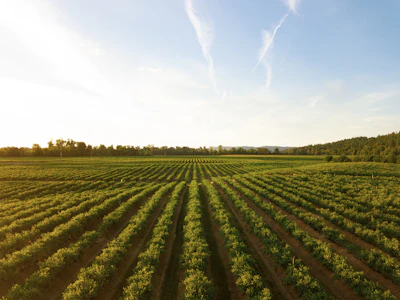
Agricultural farmland – application area for autonomous weed laser systems
Versatile Applications From cereals to vegetables – autonomous weed laser systems operate across virtually every crop type

Cereals & Arable Crops

Control of field weeds such as chamomile, thistles, cleavers and other problem weeds in wheat, barley and oilseed rape.

Vegetables & Specialty Crops

Row-by-row treatment in carrots, onions, lettuce and other row crops with very narrow spacing between crop and weed plants.

Viticulture & Orchards

Inter-row treatment between vines and fruit trees where mechanical equipment is often too wide or too large for sensitive trunk zones.

Horticulture & Nurseries

High-value ornamentals, young plants and nursery stock particularly benefit from the chemical-free approach for premium quality standards.

Urban Areas & Municipalities

Paving joints, sports facilities, cemeteries and public green spaces – residue-free, chemical-free weed removal with appropriate safety protocols and controlled operational areas.

Organic Farming

An ideal solution for certified organic operations. Compliant with EU Organic Regulation (EC) No. 2018/848 for chemical-free weed management.

Technology & System Manufacturers

Two specialised companies cover the entire value chain – from laser source to finished field machine.

Futonics Laser GmbH – High-power 2-µm fibre lasers for agriculture

2-µm Fibre Lasers for Agriculture

Futonics Laser GmbH is a German company specialising in highly efficient 2-µm fibre laser systems. The 2-micrometre wavelength lies within a strong absorption range of water and plant tissue – making Futonics lasers the optimal choice for precision laser weed control.

Futonics offers custom-engineered laser modules and systems that can be integrated into OEM machines and autonomous field robots. Precision, efficiency and robustness form the foundation for highly accurate automated weed management.

  • 2-µm fibre lasers – maximum absorption in plant tissue
  • Significantly more efficient than CO₂ or conventional diode lasers
  • High power classes for demanding field conditions
  • OEM integration and custom development
  • Made in Germany – highest manufacturing standards
nAIture – Autonomous field robots with laser equipment for chemical-free weed control

Autonomous Weed Laser Systems for Field Use

nAIture develops fully integrated, autonomous weed control machines that unite laser sources, AI imaging and vehicle platform into a field-ready system. The machines are designed for demanding field conditions and operate fully autonomously – including at night.

The nAIture system combines state-of-the-art AI object recognition with high-power lasers to combat weeds with millimetre precision. The systems are scalable – from single rows to large-scale arable operations.

  • Fully automated field robots with laser equipment
  • AI-powered real-time plant classification
  • Autonomous operation day and night
  • Suitable for vegetables, cereals and specialty crops

Futonics supplies the high-power laser sources – nAIture integrates them into turnkey autonomous field machines. Together they form a complete supply chain for professional laser weed control.

FAQ – Laser Weed Control

Answers to the most important questions about laser technology in weed management.

A focused high-power laser targets the growth centre (meristem) of the weed plant. The energy heats the cells to above 60 °C, causing irreversible cell damage and killing the plant – with no herbicides, no soil disturbance and no residues.

2-µm fibre lasers are used for laser weed control. The 2-micrometre wavelength lies within a strong absorption range of water, making it ideal for plant tissue. Futonics Laser GmbH specialises in these highly efficient 2-µm fibre lasers – significantly more effective than CO₂ or conventional diode lasers.

Yes, laser weed control is highly suitable. It is completely chemical- and residue-free, meeting the requirements of certified organic operations. No herbicides, pesticides or other chemical active substances are used. The technology is compliant with EU Organic Regulation (EC) No. 2018/848.

Modern autonomous systems such as those from nAIture can treat several hectares per day.

No. AI-powered computer vision systems distinguish between crop and weed plants in real time. The laser is directed exclusively at identified weed plants – crop plants are protected through AI-powered recognition and precise beam targeting.

Yes. Autonomous systems with their own lighting and AI cameras operate independently of natural light and can be deployed around the clock – a major advantage over conventional methods, especially during short growing windows.

Laser weed control is suitable for a wide range of crops: cereals, vegetables (carrots, onions, lettuce), viticulture, orchards, nurseries and municipal areas. The technology is particularly valuable for dense-stand crops where mechanical equipment is too large for sensitive areas.

Yes. Laser weed control is the most effective non-chemical alternative to glyphosate-based herbicides such as Roundup. It works on all common weed species, leaves no residues in soil or produce, is suitable for certified organic farms and is fully independent of herbicide approval regulations. Unlike glyphosate, there is no risk of resistance development.

Ready for Chemical-Free Weed Control?

Learn more about laser sources from Futonics and complete systems from nAIture.